Anacortes, Washington — Since 1987

Listening to the Unseen Currents of the Ocean

An independent research archive dedicated to preserving the acoustic ecology of the Pacific continental shelf and training the next generation of marine bioacousticians.

Explore the Hydrophone Archive
Research vessel on calm Pacific waters at dawn, with misty islands in the background
RV Triton Station vessel since 1992

About the Lab

Founded in 1987 by a collective of oceanographers and acoustic ecologists, the Pacific Shelf Acoustic Lab began as a modest field station on Fidalgo Island, equipped with a single hydrophone and a reel-to-reel recorder. What started as an informal gathering of graduate students and independent researchers has grown into one of the most respected independent archives of underwater sound on the West Coast.

Our mission is twofold: to preserve the vanishing acoustic landscapes of the Pacific continental shelf and deep-water canyons, and to provide hands-on training for emerging specialists in marine bioacoustics. Unlike commercial or government institutions, we operate without funding constraints that limit research scope, allowing our fellows to pursue long-term, unconventional projects that commercial pressures would not tolerate.

The lab maintains an active network of 14 hydrophone stations spanning from the Salish Sea to the Cascadia margin, recording continuously since 2003. Our archive now holds over 180,000 hours of uncompressed audio, representing one of the longest-running continuous acoustic monitoring programs in the Northeast Pacific.

0Years of continuous recording
0Active hydrophone stations
0Thousand hours archived
0Trained researchers

Learning Programs

Four core disciplines for the next generation of acoustic ecologists

01

Marine Bioacoustics

Study the vocal behavior of cetaceans, pinnipeds, and fish. Learn to identify species-specific call types, analyze dialect variation across populations, and understand the ecological significance of acoustic communication in marine environments.

  • Cetacean call classification
  • Song structure and temporal patterns
  • Passive acoustic monitoring (PAM)
  • Population acoustics and dialects
02

Hydrophone Deployment

Master the practical skills of underwater acoustic instrumentation. From mooring design and cable management to pressure housing specification and biofouling mitigation, this program covers the full lifecycle of deep-sea recording equipment.

  • Mooring design and anchor selection
  • Pressure housing engineering
  • Data retrieval and maintenance
  • Calibration and quality assurance
03

Anthropogenic Noise Analysis

Quantify the impact of shipping, seismic surveys, pile driving, and coastal construction on marine fauna. Develop skills in noise mapping, exposure modeling, and the design of mitigation strategies for protected species.

  • Shipping noise characterization
  • Seismic survey impact assessment
  • Cumulative exposure modeling
  • Mitigation protocol design
04

Ocean Acoustic Mapping

Map the three-dimensional soundscapes of continental shelves, seamounts, and abyssal plains. Learn to integrate acoustic data with bathymetry, oceanographic models, and habitat classification to produce comprehensive acoustic habitat maps.

  • Soundscape characterization
  • Bathymetric acoustic integration
  • Temporal variation analysis
  • Habitat suitability modeling

Sound Library

Archival collections from the Pacific Shelf hydrophone network

Juan de Fuca Canyon 48°27'N, 125°00'W

Humpback Song Fragment

Depth: 184 m Date: Oct 14, 2019 Duration: 4:32

Recorded during the autumn southward migration. This fragment represents Theme B of a classic six-theme song structure, performed by a solitary male. The canyon walls create a natural amphitheater effect, amplifying low-frequency components.

Cetaceans
Rosario Strait 48°35'N, 122°52'W

Snapping Shrimp Chorus

Depth: 12 m Date: Jul 3, 2021 Duration: 2:15

Dense aggregation of Alpheus heterochaelis in eelgrass beds. The broadband snap impulses create a continuous crackle that dominates the high-frequency band above 2 kHz, masking weaker cetacean echolocation clicks in the same bandwidth.

Crustaceans
Glacier Bay 58°45'N, 136°20'W

Ice Calving Event

Depth: 245 m Date: Aug 22, 2018 Duration: 8:47

Major calving from the Margerie Glacier terminus. The initial impact generates a broadband impulse followed by prolonged harmonic reverberation as ice fragments settle. Low-frequency rumble persists for several minutes as submerged ice melts and cracks.

Ambient Ice
Cascadia Margin 44°30'N, 125°15'W

Seismic Airgun Array

Depth: 1,200 m Date: Sep 9, 2020 Duration: 6:18

Recorded 18 km from an active 36-airgun seismic survey vessel. The repetitive high-energy pulses dominate the 10-120 Hz band, with harmonic ghosts visible at 240 Hz intervals. Note the temporary cessation period at 03:22, likely a mammal mitigation shutdown.

Seismic / Hydrothermal
Astoria Canyon 46°12'N, 124°05'W

Fin Whale 20-Hz Pulses

Depth: 890 m Date: Nov 30, 2022 Duration: 10:00

Regular 20-Hz down-swept pulses characteristic of Balaenoptera physalus in the Northeast Pacific population. The consistent 12-second interval between pulses suggests a single individual. Deep-water recording minimizes surface noise contamination.

Cetaceans
Strait of Juan de Fuca 48°20'N, 123°30'W

Container Vessel Passage

Depth: 156 m Date: Mar 15, 2023 Duration: 22:00

Complete passage of an 8,000-TEU container vessel through the shipping lane. The spectrogram clearly shows the crescendo-decrescendo pattern of propeller cavitation noise, peaking at 120 dB re 1 μPa in the 50-200 Hz band. Engine harmonics visible at 12 Hz fundamental.

Anthropogenic

Signal Processing Lab

Before and after: cleaning vessel noise from biological recordings

Raw Recording

Center frequency: 85 Hz

Bandwidth: ±15 Hz

Attenuation: -42 dB

Filtered Output

This demonstration uses a real recording from Station JDF-03 in the Juan de Fuca Canyon, where a humpback whale vocalization was contaminated by distant shipping noise. A Butterworth band-stop filter centered at 85 Hz removes the engine harmonic while preserving the biological signal above 200 Hz. Toggle the filter to compare raw and processed spectrograms.

Field Studies

Selected student and research projects from the Pacific Shelf network

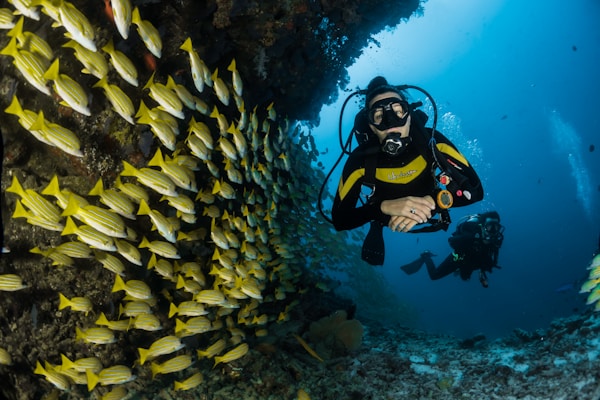
Diver preparing hydrophone equipment on the deck of a research vessel
2023 — Graduate Project

Hydrophone Array Calibration in High-Energy Environments

Maya Chen developed a novel calibration protocol for cabled hydrophone arrays subject to strong tidal currents in Deception Pass. The method accounts for flow-induced self-noise and has been adopted by three regional monitoring programs.

Station: DCP-01Duration: 6 months
Killer whales swimming in the Salish Sea with mountains in the background
2022 — Collaborative Research

Orca Dialect Mapping in the Salish Sea

A two-year acoustic monitoring project tracking J, K, and L pod vocal repertoires. The study identified three previously unrecorded call types and documented significant dialect divergence between southern residents and transient populations.

Stations: SJI-02, SJI-04, SJI-07Duration: 24 months
Deep ocean underwater scene with bioluminescent particles
2021 — Thesis Research

Deep-Scattering Layer Acoustic Characterization

James Nakamura used broadband echosounders and concurrent hydrophone recordings to correlate mesopelagic migration patterns with diel acoustic signatures. The work revealed previously unknown vertical migration timing at the Cascadia margin.

Station: CAS-03Depth: 800–1,200 m
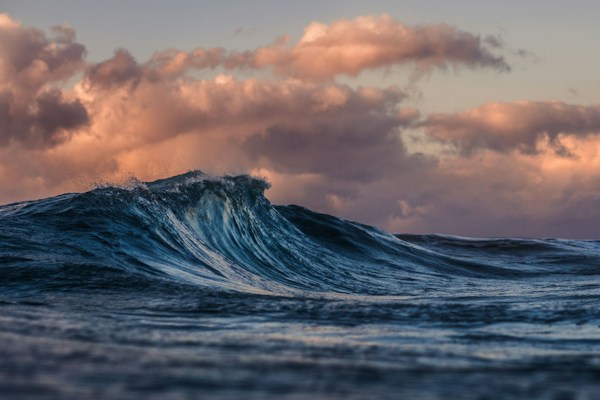
Stormy ocean waves crashing against rocky coastline
2020 — Storm Event

Storm-Induced Ambient Noise Variability

Documentation of a record-breaking winter storm's effect on the Northeast Pacific soundscape. Recordings captured the transition from wind-dominated to wave-breaking-dominated noise regimes as the storm intensified.

Stations: Network-wideEvent: Dec 2020 storm
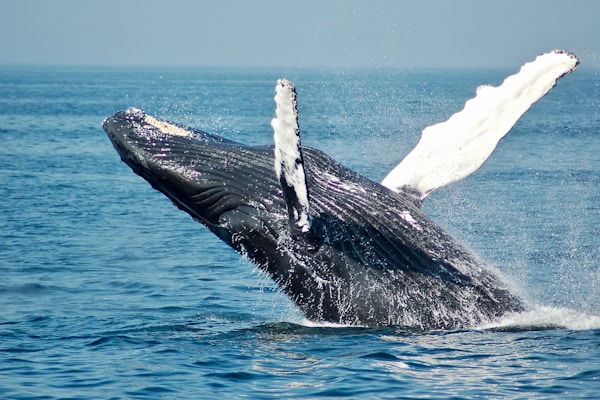
Humpback whale breaching the surface of the ocean
2019 — Longitudinal Study

Humpback Song Evolution: 2003–2019

Comprehensive analysis of 16 years of humpback song recordings from the same breeding ground, demonstrating the rapid cultural transmission of novel song themes across the North Pacific population.

Station: JDF-03Recordings: 4,200+ hours
Research vessel at sunset with scientific equipment visible on deck
2018 — Equipment Test

Ultra-Low-Frequency Hydrophone Validation

Field validation of a custom-built vector hydrophone designed to record infrasonic signals below 5 Hz. The instrument successfully recorded blue whale B-calls at ranges exceeding 200 km in deep-water propagation conditions.

Station: Abyssal test siteDepth: 2,800 m

Hydrophone Network

Active and historical recording stations across the Northeast Pacific

Active station
Historical
Planned

Select a station on the map to view details

Research Station

The Pacific Shelf Acoustic Lab operates from a converted cannery building on the waterfront of Anacortes, Washington. Our facilities include a wet lab, electronics workshop, archival storage, and a listening room with reference monitors for critical audio evaluation.

Contact Information

+1 (360) 555-0194
1420 Commercial Ave
Anacortes, WA 98221, USA

Visiting Hours

Archival listening room: Tuesday–Saturday, 10:00–16:00
Workshop access for fellows: Monday–Friday, 08:00–18:00
Public tours: First Saturday of each month, 14:00

Historic waterfront building on the Pacific Northwest coast with weathered wooden exterior
Station coordinates 48°31'12"N, 122°36'36"W